In regions with extremely harsh climates, environmental conditions can affect both the surface materials and the internal structure of sculptures. The following strategies help ensure long-term durability and performance.
1. High Temperatures and Thermal Expansion
Metals expand when exposed to high temperatures. If a sculpture’s structure is too rigid, thermal expansion can place stress on welded joints and potentially lead to cracking.
Solutions:
-
Use stainless steel, which reflects more sunlight and reduces heat absorption.
-
Design internal expansion joints so the structure can expand and contract naturally without causing structural damage or seam failure.
2. Wind, Sand, and Surface Abrasion
Continuous exposure to wind-driven sand can cause significant physical wear on sculpture surfaces.
Solutions:
-
Use stainless steel or Corten steel with brushed or matte finishes. Mirror-polished surfaces are difficult to maintain in desert environments because scratches and abrasions become highly visible.
-
Optimize the sculpture’s form to prevent sand accumulation, especially in hollow sections, which also helps maintain structural stability.
3. Salt Spray and Internal Corrosion
In coastal environments, salt and moisture can enter hollow structures and gradually corrode the internal framework.
Solutions:
-
Use 316L stainless steel for the outer shell. Corten steel should be used cautiously in high-humidity environments, as uneven rusting may occur and runoff may stain surrounding surfaces.
-
Install drainage holes at the lowest points of the structure so condensation and accumulated water can be discharged, keeping internal steel components dry.

4. Ultraviolet Radiation and Coating Degradation
High levels of UV radiation can break down ordinary paint coatings, causing fading and peeling.
Solutions:
-
Stainless steel and Corten steel perform best under UV exposure, as they do not fade.
-
Use high UV-resistant coatings when painted finishes are required.
-
Apply industrial-grade primers to ensure strong adhesion and long-term durability, especially in high-temperature desert conditions.
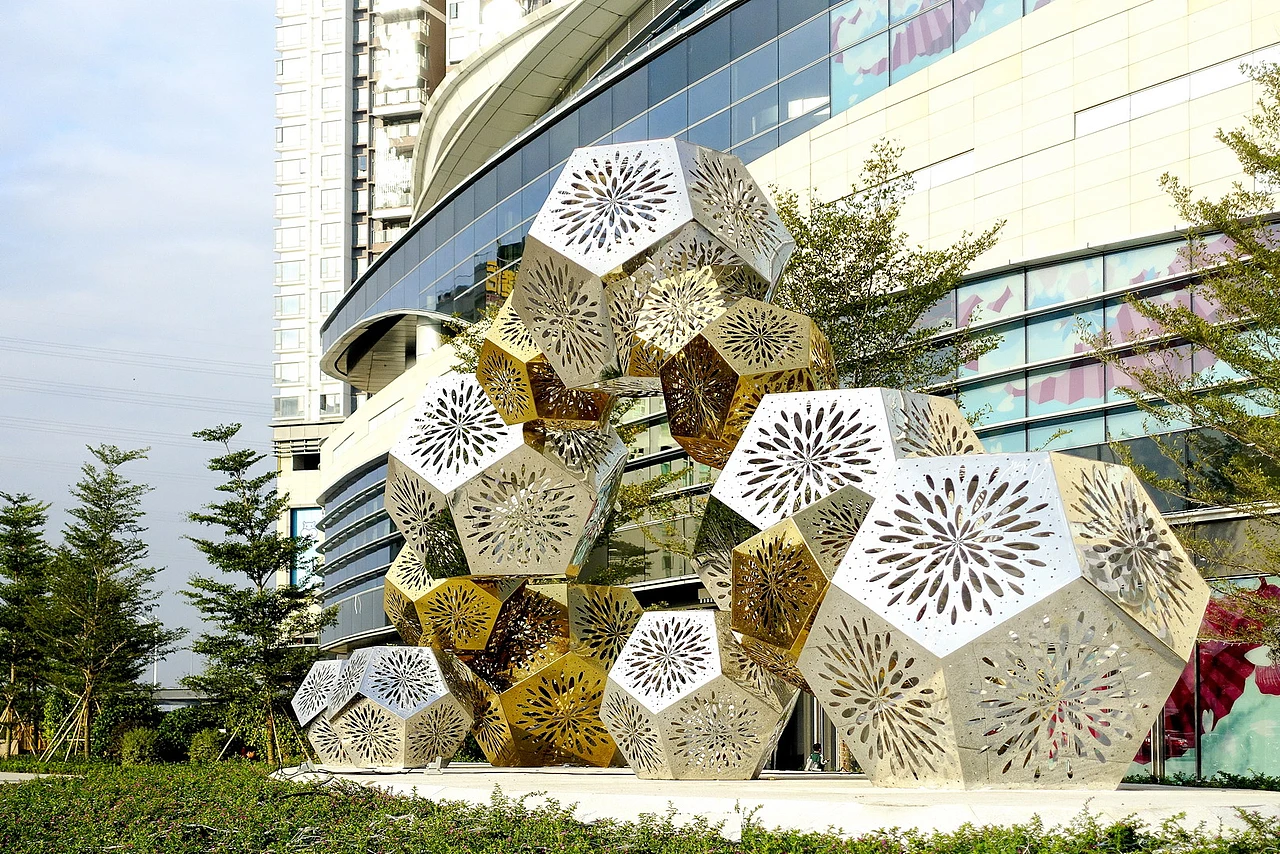
Summary
-
High temperature: Stainless steel materials + internal expansion joint design
-
Wind and sand: Brushed or matte finishes + sand-resistant structural design
-
Salt spray: 316L stainless steel + concealed drainage holes
-
Strong UV exposure: UV-resistant coatings + industrial-grade primer systems
With the correct engineering strategies applied during the design stage, climate conditions will not become a barrier—and future maintenance costs can be significantly reduced.
At Vincentaa, we do more than create sculptures. We develop durable solutions tailored to specific environments. Whether your project is located in extreme desert heat or along corrosive coastal zones, our team provides the technical expertise needed to ensure your sculpture stands the test of time.