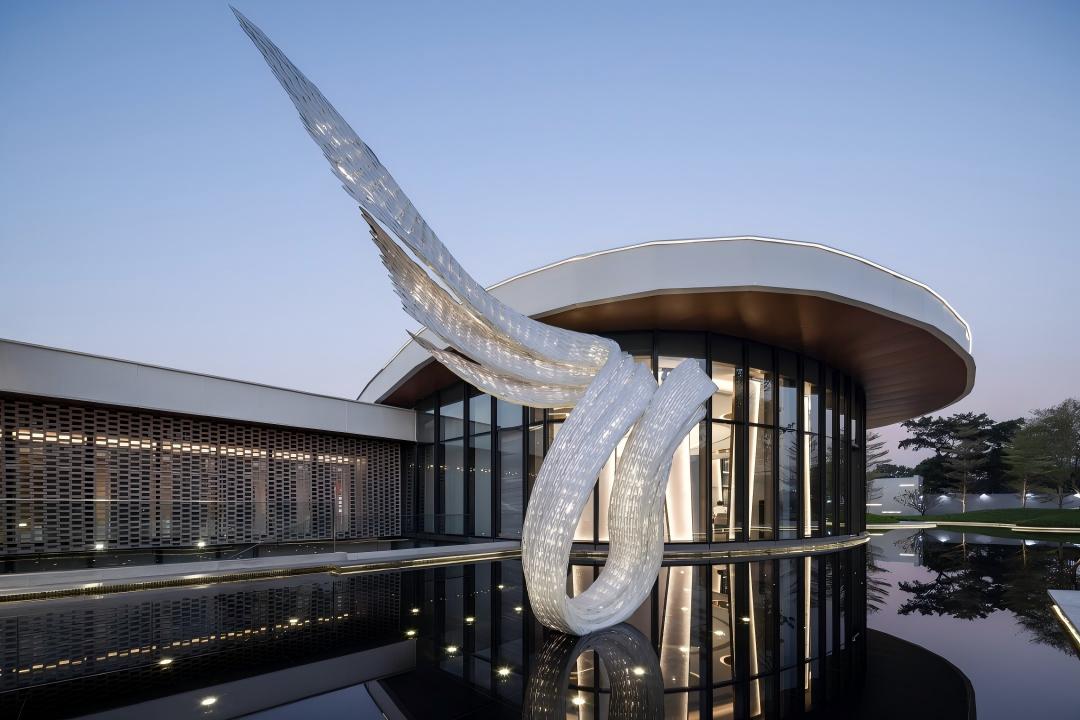
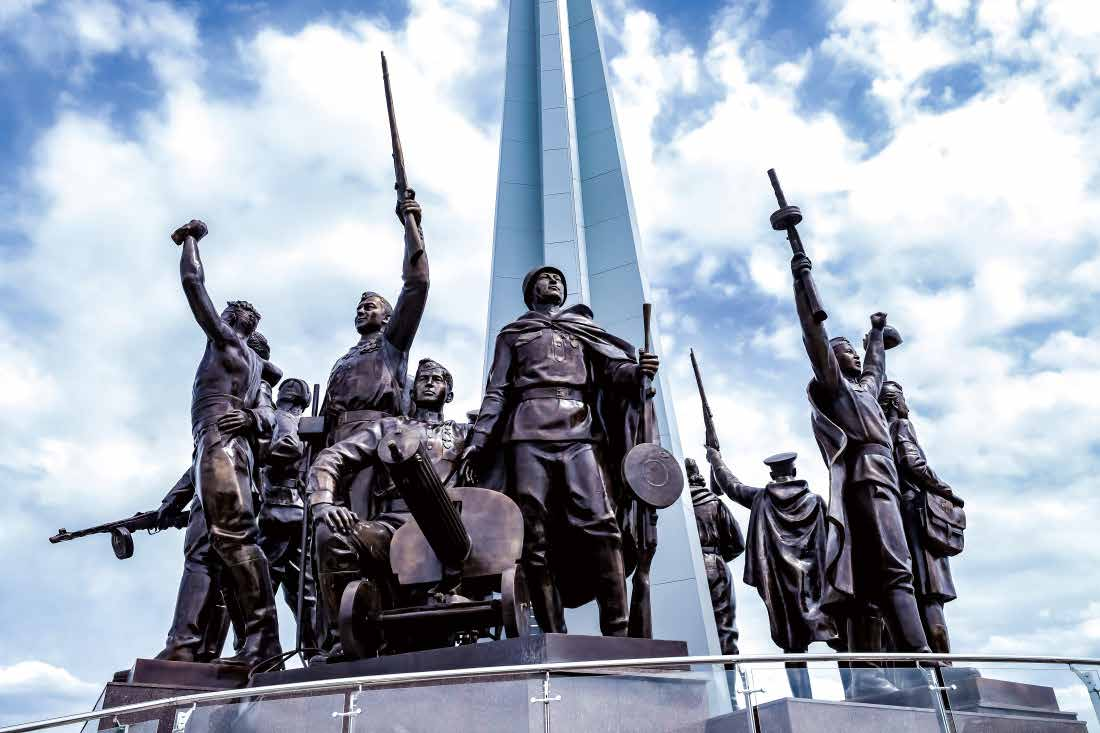
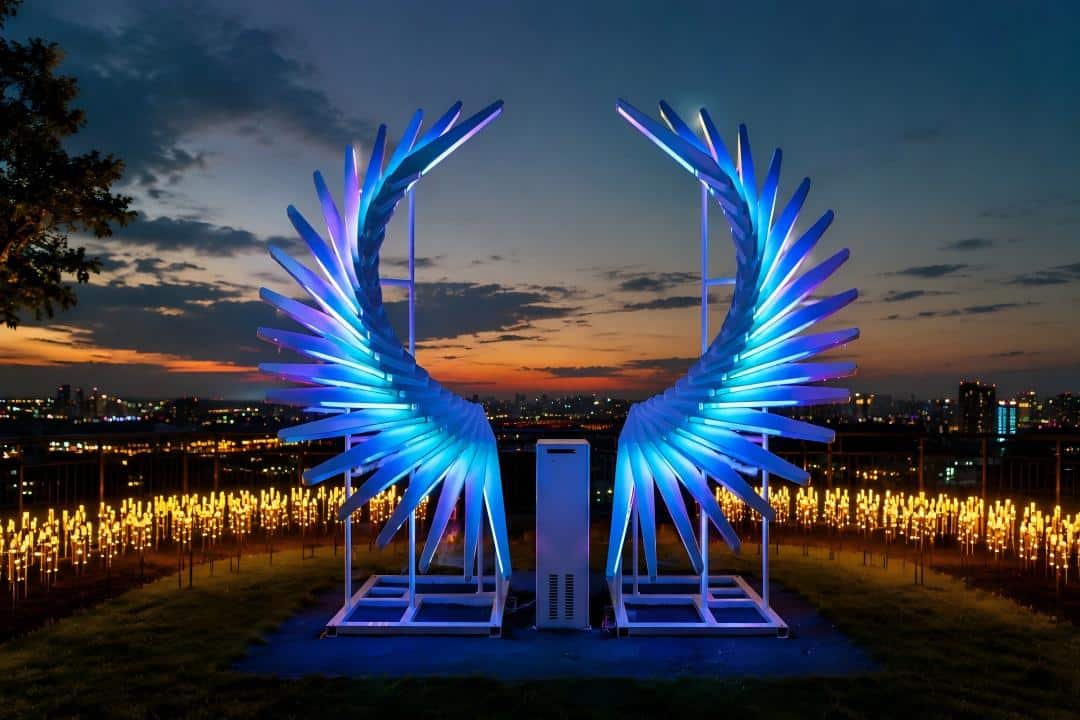
In real estate developments, sculptures are not standalone works of art. Project entrances, commercial plazas, residential landscapes, and hotel spaces all have different requirements for sculpture function, scale, and visual impact.
Therefore, choosing the right sculpture involves more than the design itself. Its location, project positioning, architectural and landscape environment, and primary viewing distance should all be considered to determine the most suitable type of sculpture for the project.
1. Main Project Entrances: Large Landmark Sculptures with Strong Visual Identity
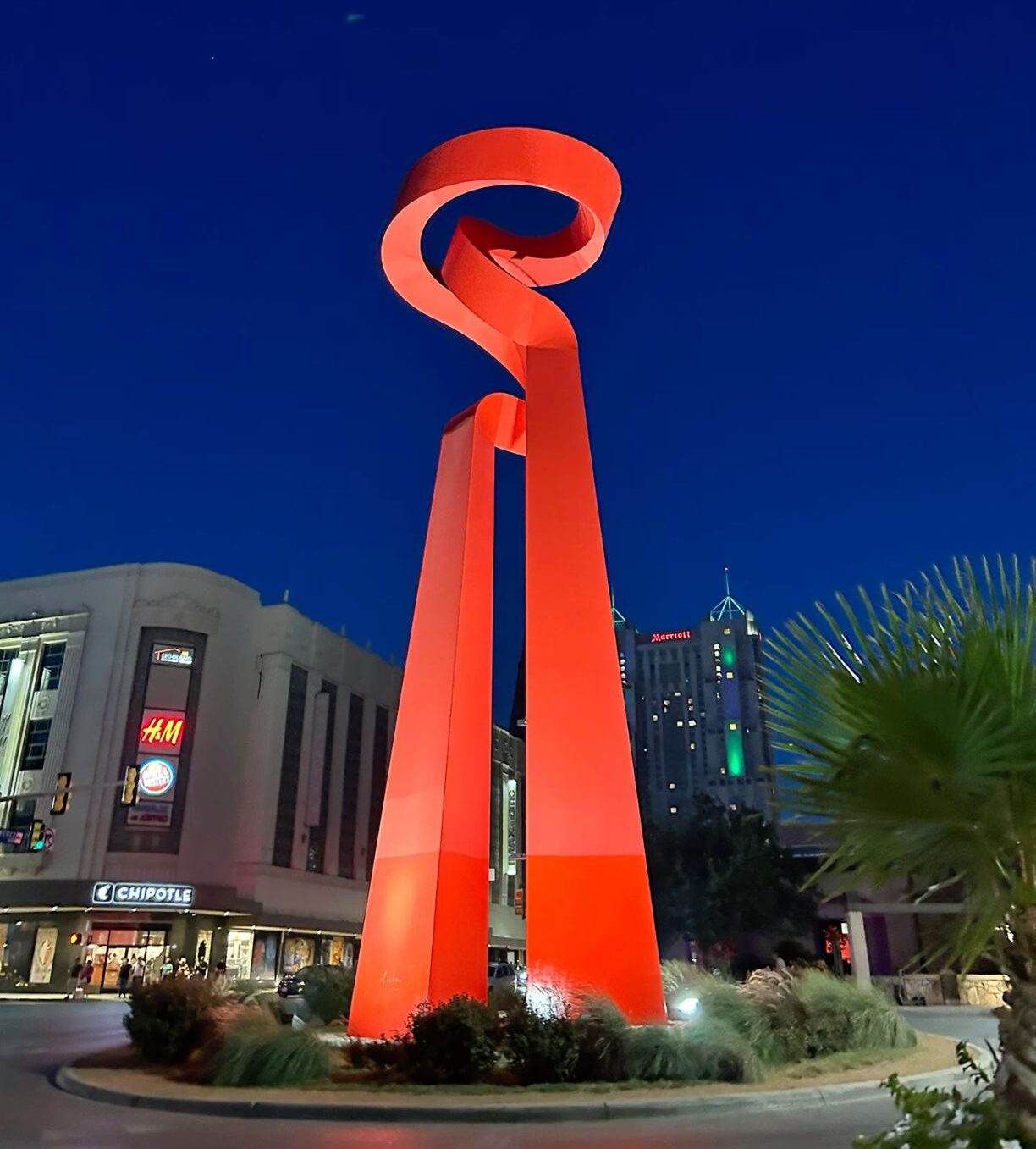
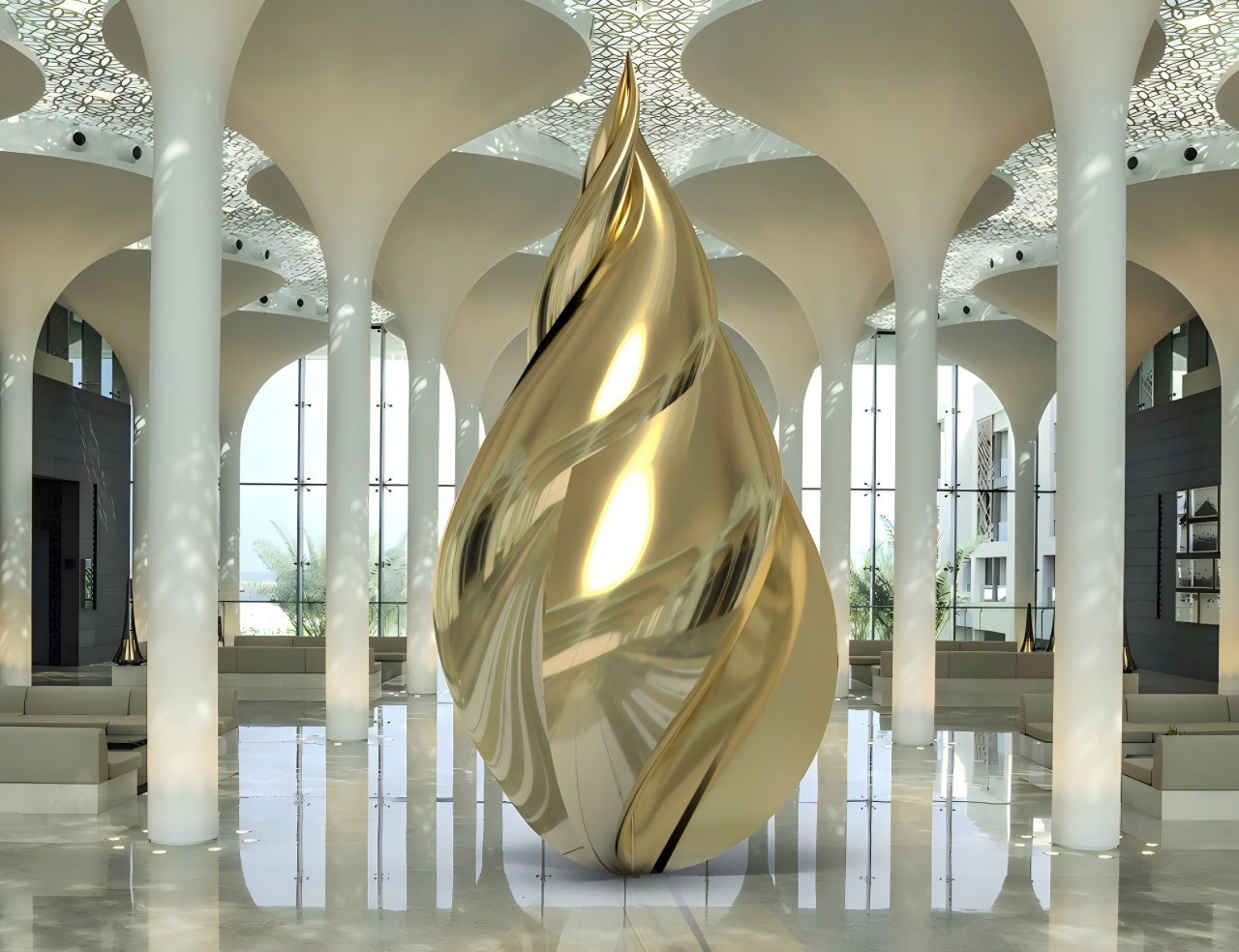
The main entrance is an important location for establishing the first impression of a development. It is generally more suitable for large-scale sculptures with clear silhouettes and strong visual identity, such as:
- Large abstract metal sculptures
- Landmark sculptures
- Custom thematic sculptures
Because entrance sculptures are often viewed from a distance or from moving vehicles, bigger is not always better. Their scale should be planned according to the entrance dimensions, building height, landscape axis, and primary viewing directions.
2. Commercial Plazas: Visually Engaging and Interactive Public Art
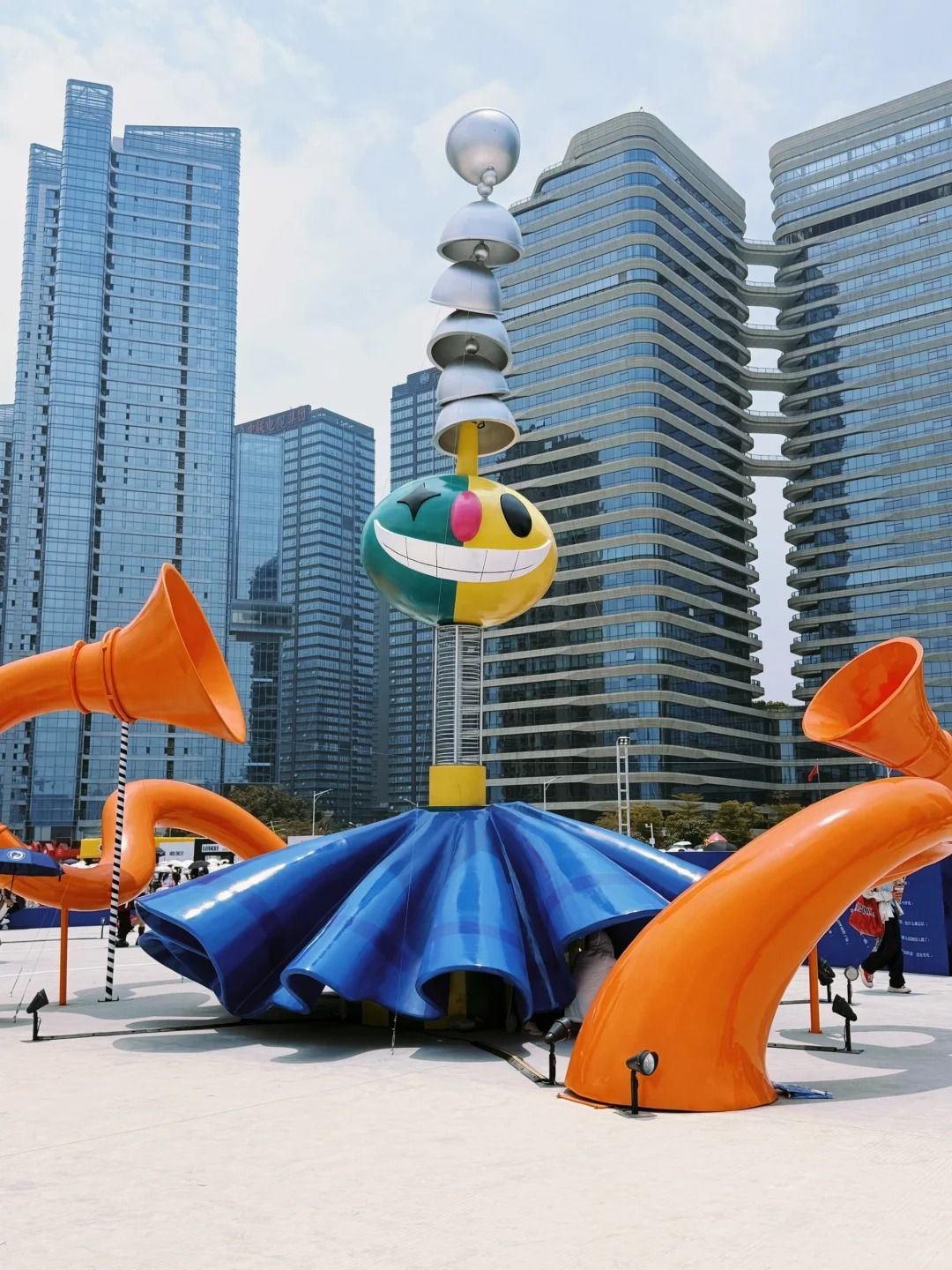
Commercial plazas usually have concentrated pedestrian traffic, with visitors approaching from different directions, stopping, and viewing artworks at close range. Suitable options include:
- Abstract public art sculptures
- Large metal sculptures
- Interactive art installations
- Thematic art installations
Unlike entrance sculptures, commercial plaza sculptures need to work both from a distance and at close range, while also considering the relationship between the artwork and human scale.
Distinctive public art can become a visual focal point within the plaza while creating spaces for photography, gathering, and social interaction, allowing the sculpture to become part of how the public space is actually used.
3. High-End Residential Developments: Art Sculptures Integrated with the Landscape
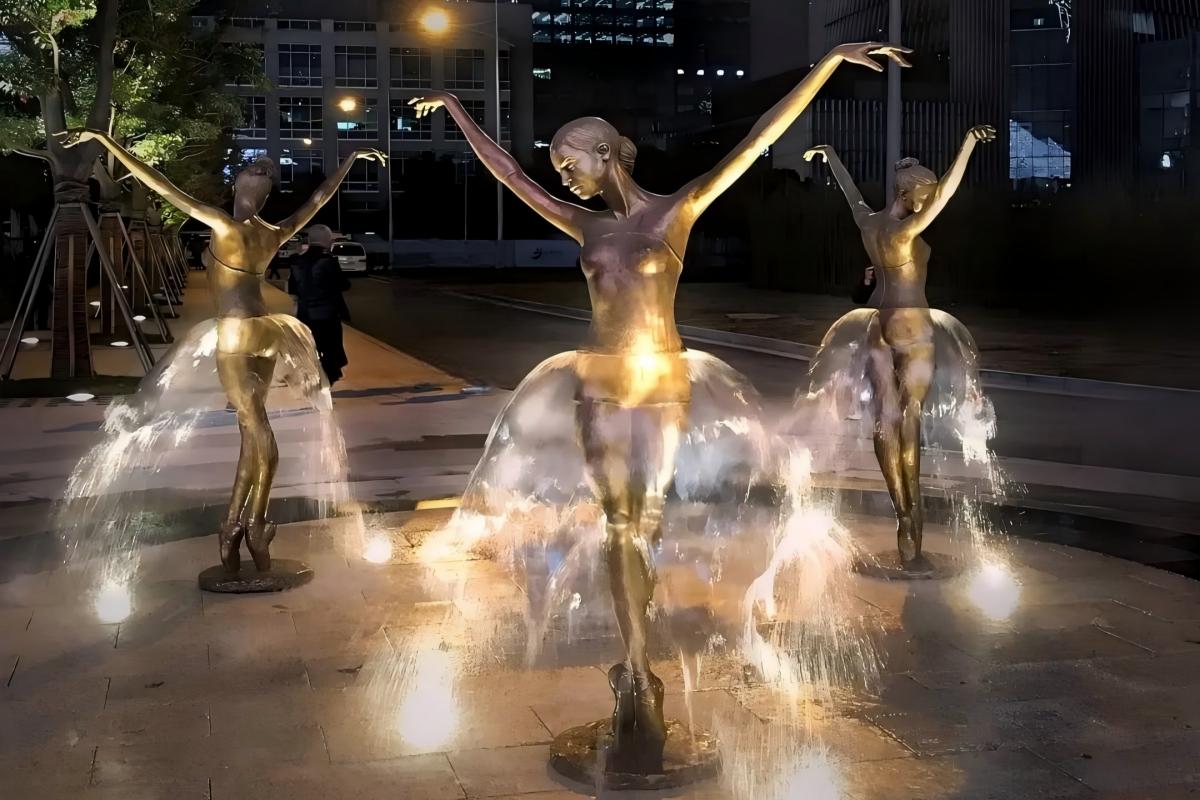
Sculptures in high-end residential developments usually do not need to function as dominant landmarks. More importantly, they should create a consistent visual language with the architecture and surrounding landscape.
Suitable types include:
- Abstract landscape sculptures
- Water feature sculptures
- Art installations
- Small-scale landmark artworks
Sculptures can be placed around entrance water features, central landscapes, clubhouses, courtyards, or other key landscape nodes, working together with greenery, water, and architecture to create a more complete spatial experience.
For example, contemporary residential developments may use clean, abstract stainless steel sculptures, while more natural landscape environments may be better suited to softer forms, materials, and surface finishes.
4. Hotels and Resorts: Thematic Sculptures That Create Memorable Experiences
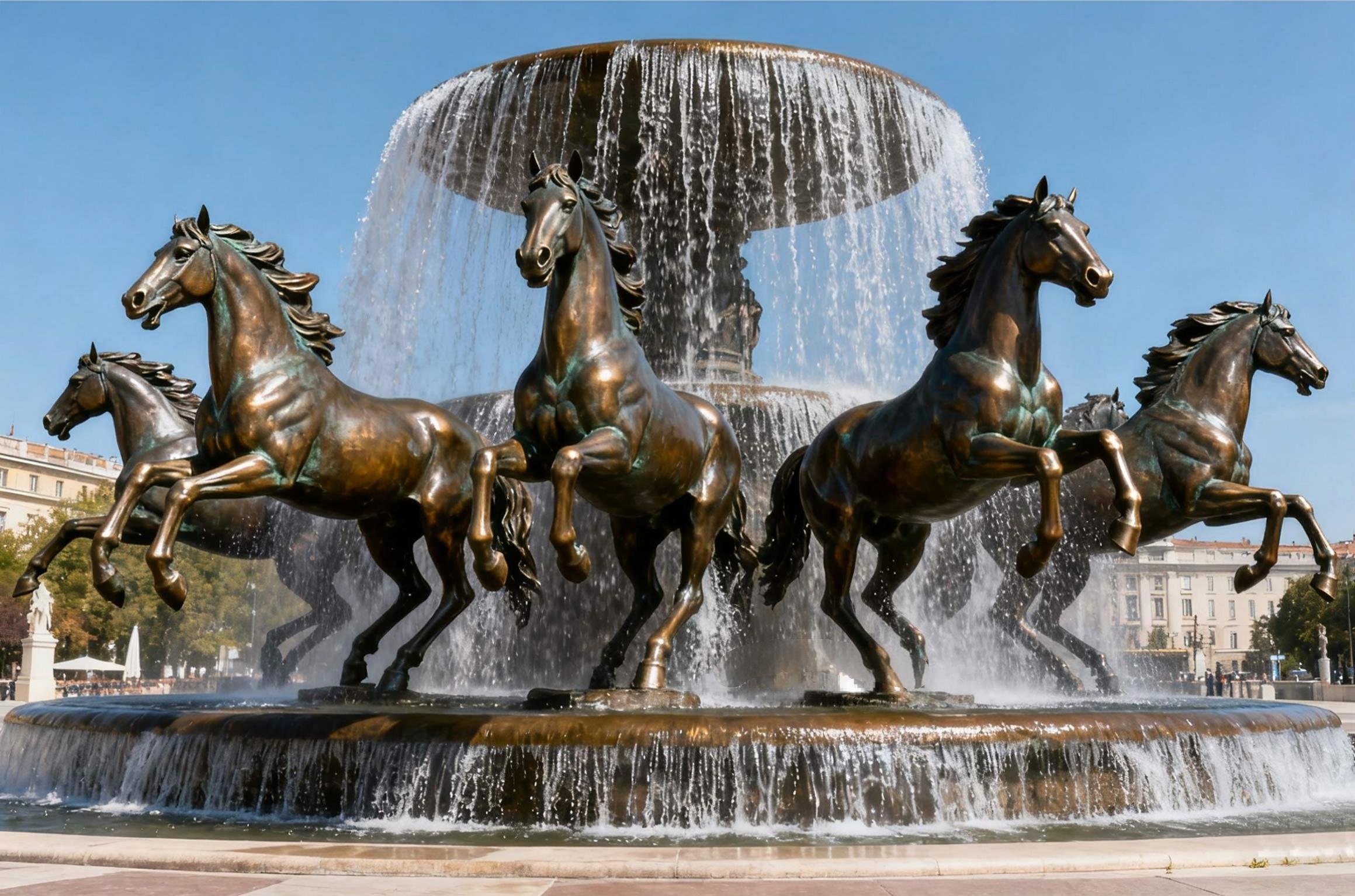
Hotel and resort developments place greater emphasis on experience and project identity. Sculptures can therefore serve different purposes depending on where they are installed.
- Hotel Entrance: A distinctive entrance sculpture can help establish the project’s first visual impression.
- Resort Landscape: Thematic landscape sculptures and water feature sculptures can be integrated with pools, waterfront areas, and landscaped surroundings.
- Outdoor Public Areas: Thematic art installations can create memorable locations for guests to take photos, gather, and spend time.
For resort developments, sculpture design can also respond to local culture, the natural environment, or the overall project theme, allowing the artwork to become part of the spatial experience rather than simply an added decoration.
5. Mixed-Use Developments: Different Spaces Require Different Levels of Sculpture
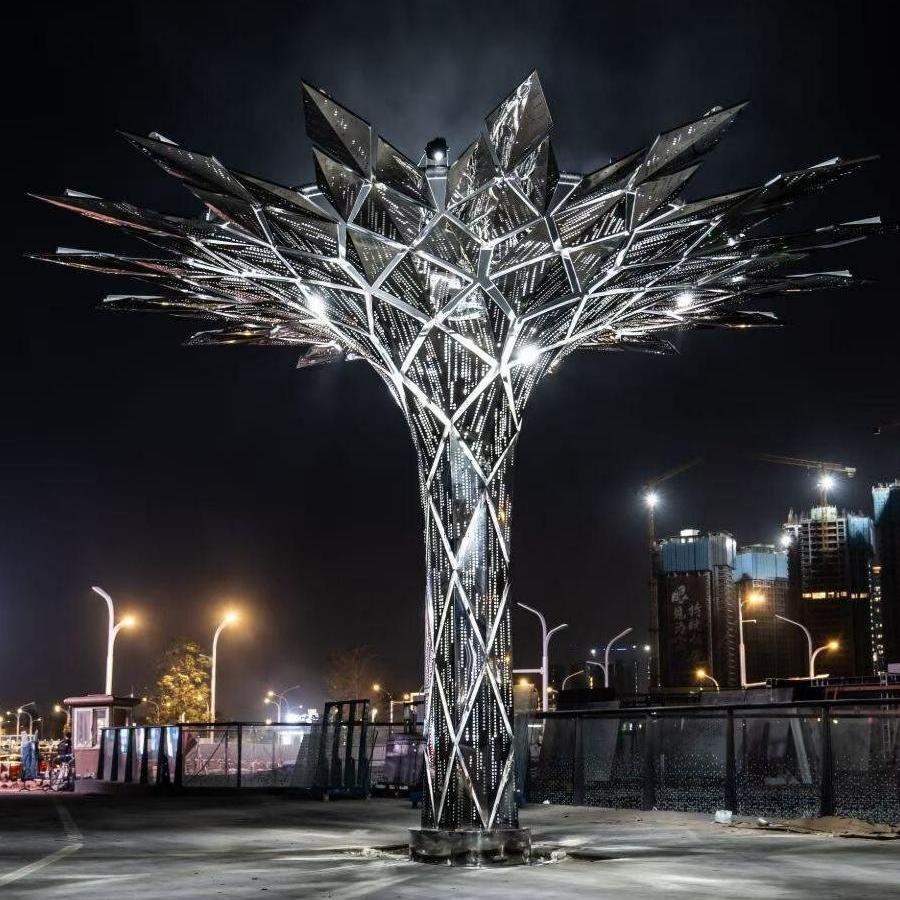
For a mixed-use development, sculpture planning usually involves more than selecting a single artwork. Different types and levels of public art may be required for different areas.
The sculpture at the main entrance helps establish the identity of the development. A commercial plaza requires stronger visual attraction and public interaction. A hotel entrance should reflect the image of the property, while landscape areas focus more on the relationship between sculpture and the surrounding environment.
Therefore, sculpture planning for large real estate developments should consider the hierarchy, scale, style, materials, and spatial distribution of different artworks, allowing public art to become part of the overall landscape system.
6. What Makes a Sculpture Suitable for a Real Estate Project?
Regardless of the type of real estate development, a suitable sculpture usually needs to consider several factors:
- Project positioning: Residential, commercial, hotel, and cultural or tourism developments require different artistic languages.
- Spatial scale: Sculpture size should correspond to the surrounding architecture, plaza, and viewing distance.
- Installation location: Locations with strong visual value should be selected based on major pedestrian routes, vehicle traffic, and landscape axes.
- Materials and environment: Materials should be selected according to outdoor climate, coastal conditions, and maintenance requirements.
- Project implementation: Structure, transportation, foundations, and on-site installation should be considered from the early stages.
- Landscape coordination: Sculptures should work together with architecture, lighting, water features, and greenery.
How Vincentaa Supports Sculpture Projects for Real Estate Developments
Vincentaa provides custom sculpture services for real estate developments based on project positioning, installation site, architectural and landscape conditions, and practical application requirements.
From sculpture type, form, and scale planning to material recommendations, design development, structural coordination, fabrication, transportation, and installation support, we plan each stage according to the actual conditions of the project, helping ensure that the sculpture not only has strong artistic expression but also fits naturally into its architectural and landscape environment.