1. What Are the Common Methods for Anchoring Outdoor Sculptures?
There is no single standard solution for securing an outdoor sculpture to a base. The most appropriate method depends on the sculpture’s size, weight, material, center of gravity, installation environment, and foundation conditions.
Common anchoring methods include:
- Anchor bolt fixing
- Base plate connection
- Embedded structural anchoring
- Concealed fixing systems
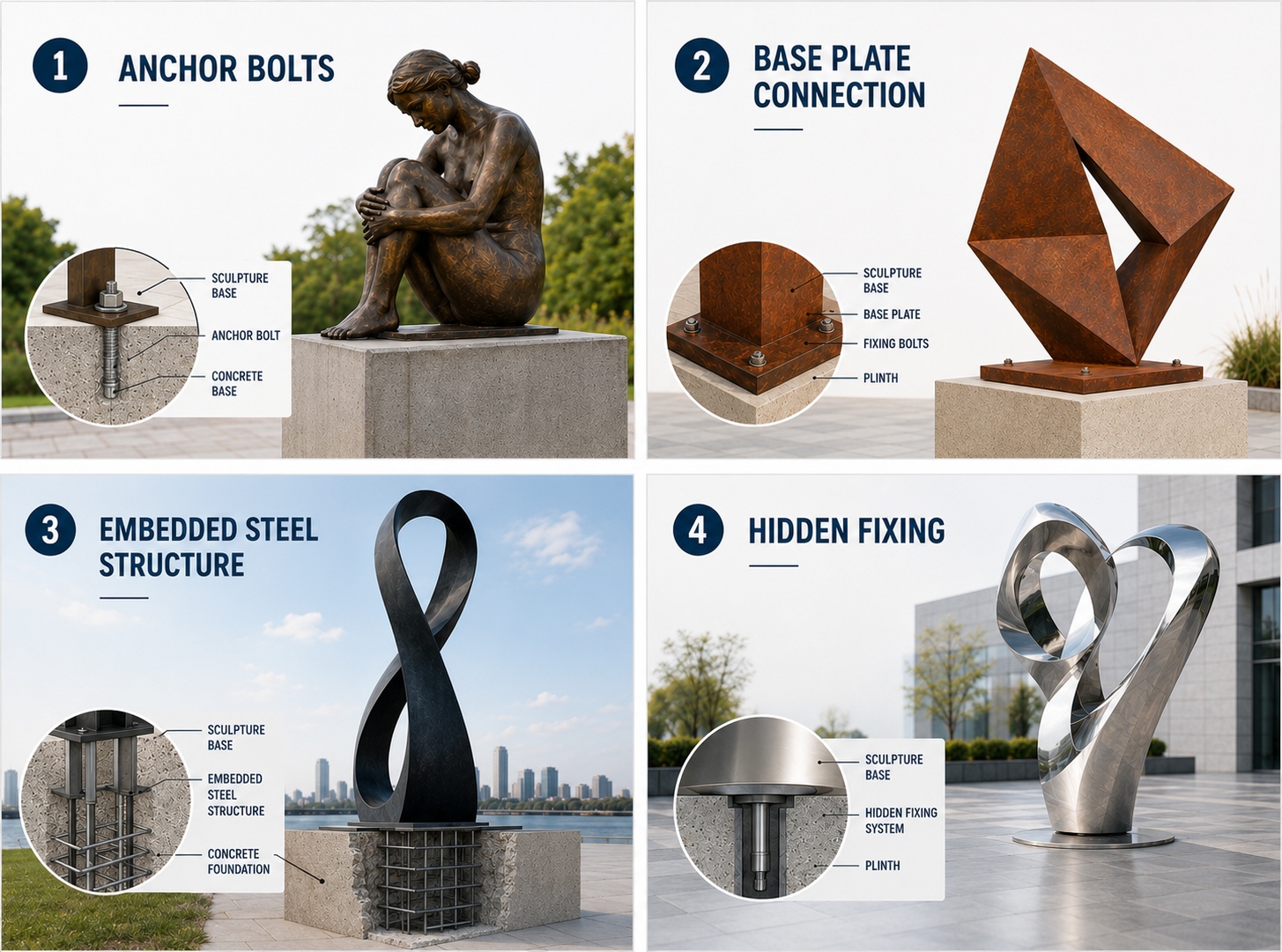
| Fixing Method | Advantages | Key Considerations |
|---|---|---|
| Anchor Bolt Fixing | High stability, widely applicable, easy to inspect and maintain | Requires a reliable concrete foundation |
| Base Plate Connection | Clear connection details, easier to design and install | Base dimensions, bolt holes, and connection details must be confirmed before production |
| Embedded Structural Anchoring | Excellent stability, ideal for long-term outdoor installations | Must be coordinated with foundation construction in advance |
| Concealed Fixing | Cleaner appearance, preserves the sculpture’s visual integrity | Requires early planning of the anchoring structure during the design stage |
The table above provides a quick overview of common anchoring solutions, their applications, and key considerations. However, in real projects, the fixing method should never be selected in isolation. The sculpture type, dimensions, foundation conditions, and environmental factors must all be evaluated together to determine the most suitable installation approach.
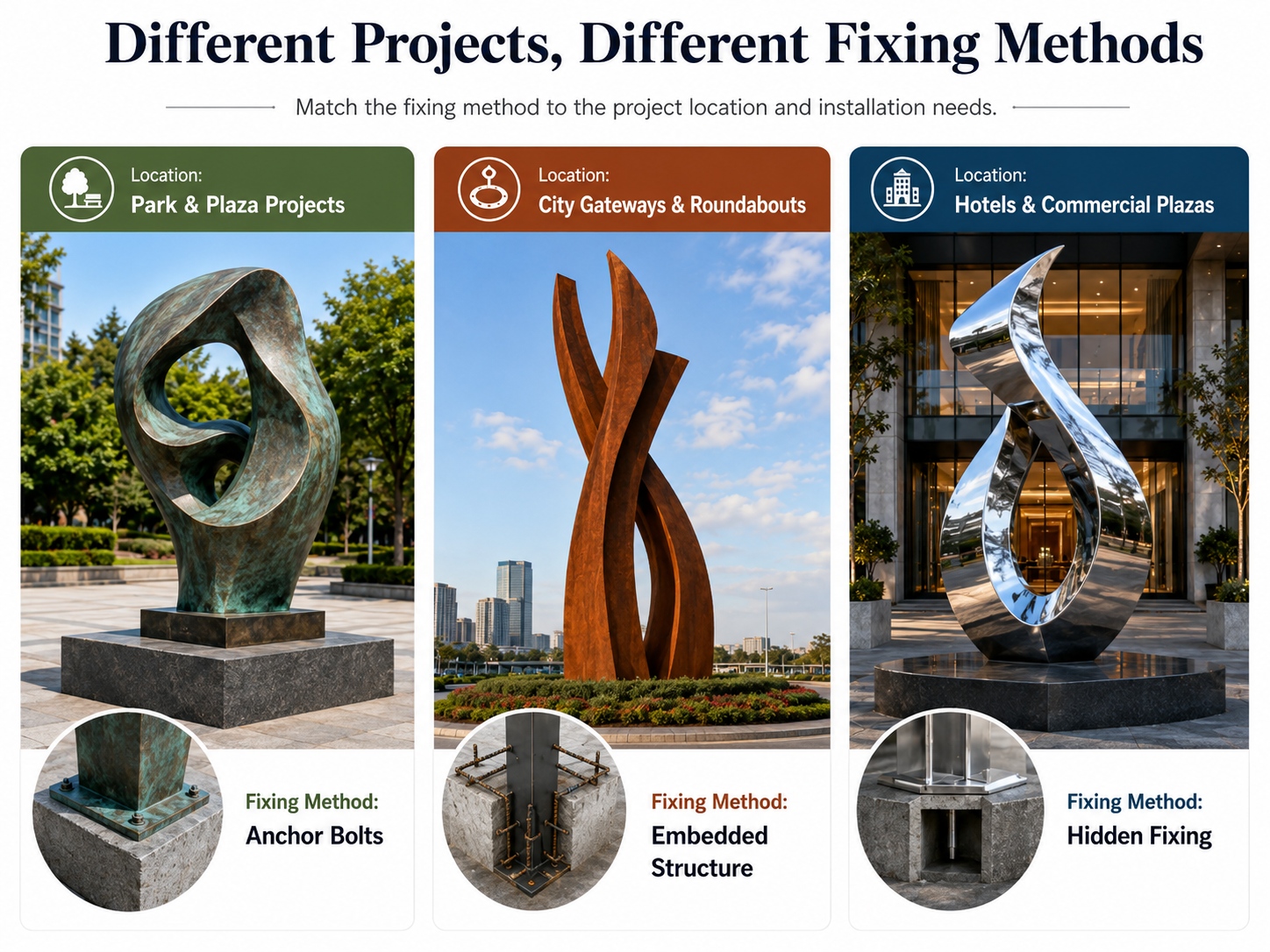
2. How to Choose the Right Anchoring Method for Different Projects?
1. Parks, Public Squares, and Medium-Sized Outdoor Projects
For sculptures commonly found in parks, plazas, and commercial districts, anchor bolt fixing and base plate connections are often the preferred solutions.
These projects typically have concrete foundations, and sculpture sizes are relatively manageable.
2. City Gateways, Roundabouts, and Large Landmark Projects
Landmark sculptures installed at city entrances or major roundabouts are generally larger in scale and located in more exposed environments, making structural requirements more demanding.
Embedded structural anchoring is often preferred because it integrates the sculpture’s internal framework with the foundation system.
Key considerations include:
- Stronger foundation connections
- More robust internal structural systems
- Wind resistance and long-term safety
- Early coordination with foundation construction
3. Commercial Plazas, Hotel Entrances, and Premium Developments
In high-end commercial and hospitality projects, visual presentation is often just as important as structural safety.
For these applications, consider:
- Concealed fixing systems
- Hidden base plate treatments
- Integrated sculpture-and-landscape base designs
These approaches help maintain a clean and refined appearance while ensuring sculpture structural reliability.

3. What Information Should Be Confirmed Before Selecting an Anchoring Method?
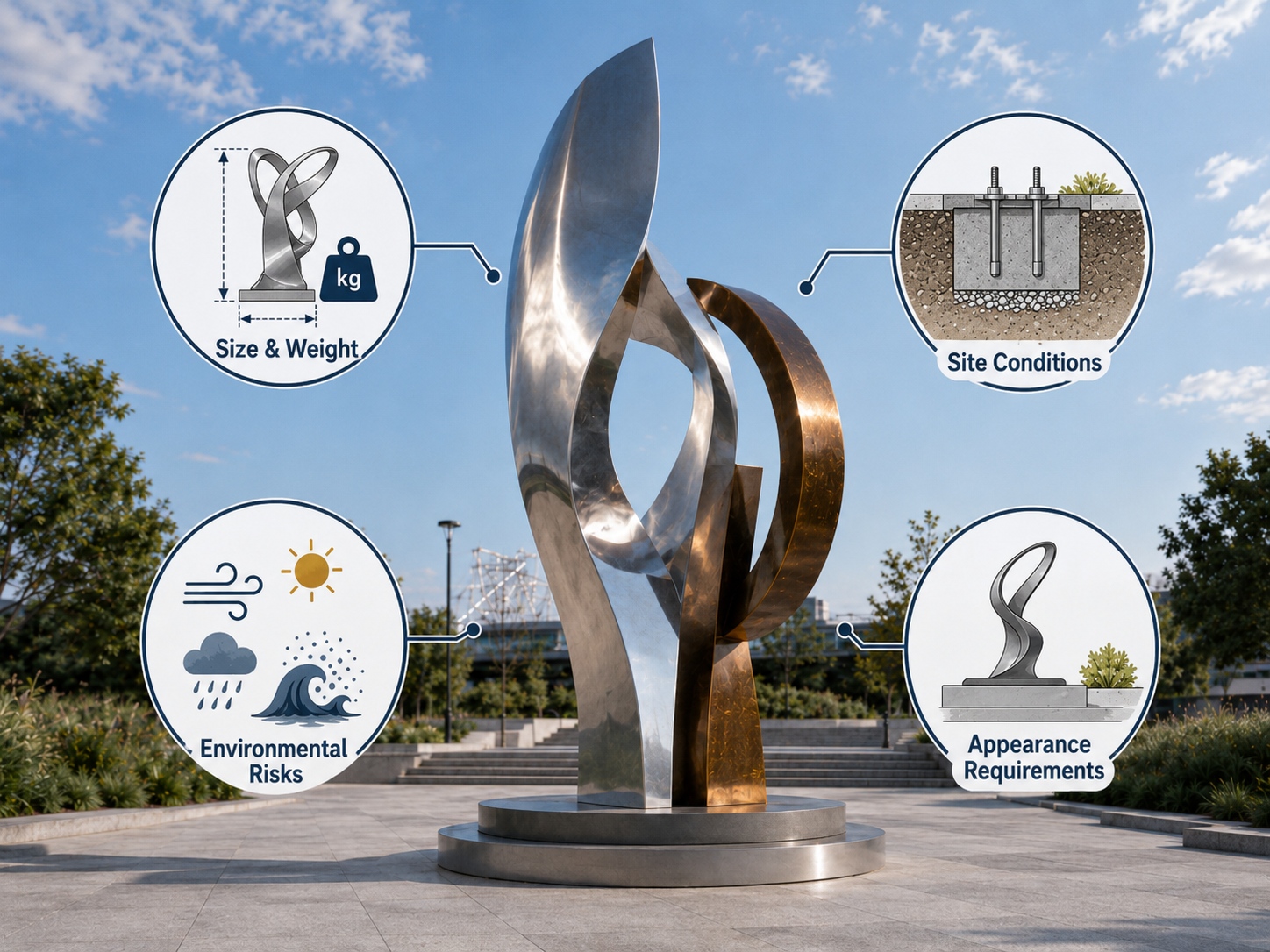
1. Sculpture Dimensions, Weight, and Center of Gravity
The following information should be confirmed:
- Overall sculpture height
- Total sculpture weight
- Base contact area
- Center of gravity location
- Internal structural configuration
These factors influence bolt design, quantity, connection points, and whether the sculpture should be fabricated in sections.
2. Site Foundation Conditions
Key questions include:
- Is there an existing concrete foundation?
- Is the foundation strength sufficient?
- Are drilling or embedded anchors permitted?
- Are there underground utilities?
- Is there adequate access for installation equipment?
If the site conditions are unsuitable for the proposed anchoring method, adjustments should be made early to avoid delays during installation.
3. Environmental Risk Assessment
Outdoor sculptures are exposed to environmental conditions over the long term. Therefore, anchoring systems should be designed according to site-specific risks.
Factors to consider include:
- Wind loads
- Rain and drainage conditions
- Temperature fluctuations
- Humidity levels
- Sand and dust exposure
- Salt-laden coastal environments
- Public interaction and contact
For public art installations, anchoring systems are directly related to long-term public safety.
4. Visual Requirements
Some projects place a strong emphasis on visual purity and seamless integration, particularly hotel entrances, commercial plazas, and luxury developments.
In these cases, the anchoring system should balance aesthetics and structural performance.
If visible anchor bolts or exposed base plates are undesirable, concealed fixing systems and integrated foundation solutions should be incorporated during the design stage.

Conclusion
The correct method for securing an outdoor sculpture to a base depends on the sculpture’s size, weight, material, center of gravity, foundation conditions, and environmental exposure.
With experience in more than 800 large-scale public sculpture projects, Vincentaa evaluates site conditions from the earliest planning stages and confirms anchoring strategies before production begins. By coordinating sculpture fabrication, foundation engineering, transportation, and on-site installation, we ensure every project achieves long-term stability, safety, and visual excellence. Plan a sculpture project now?