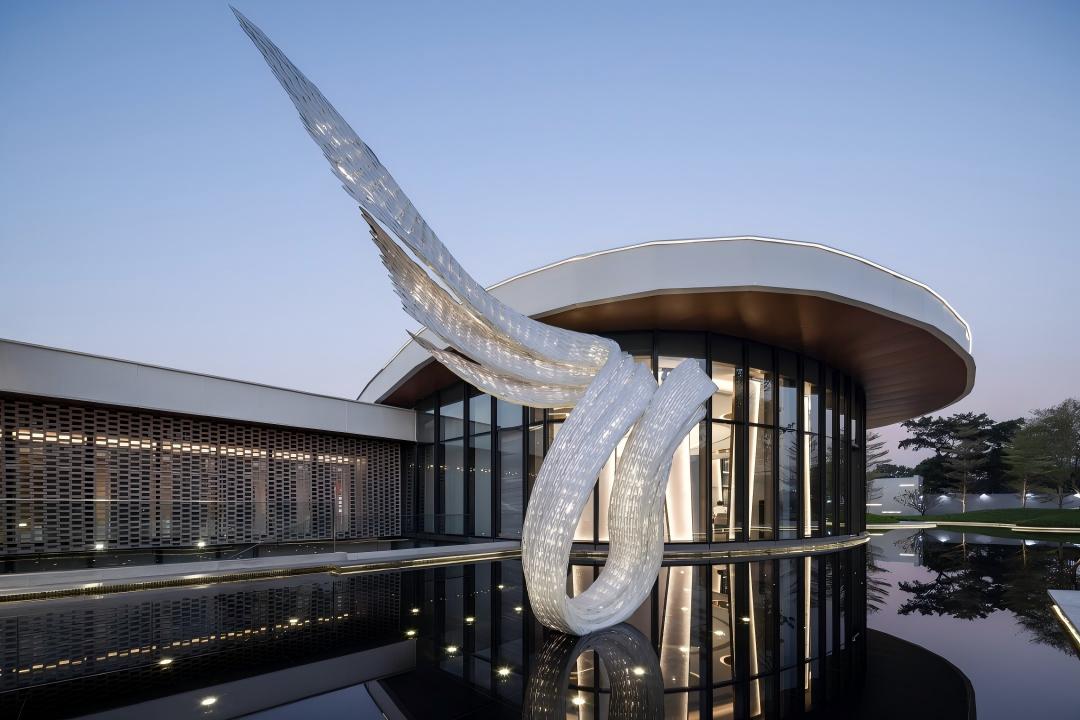
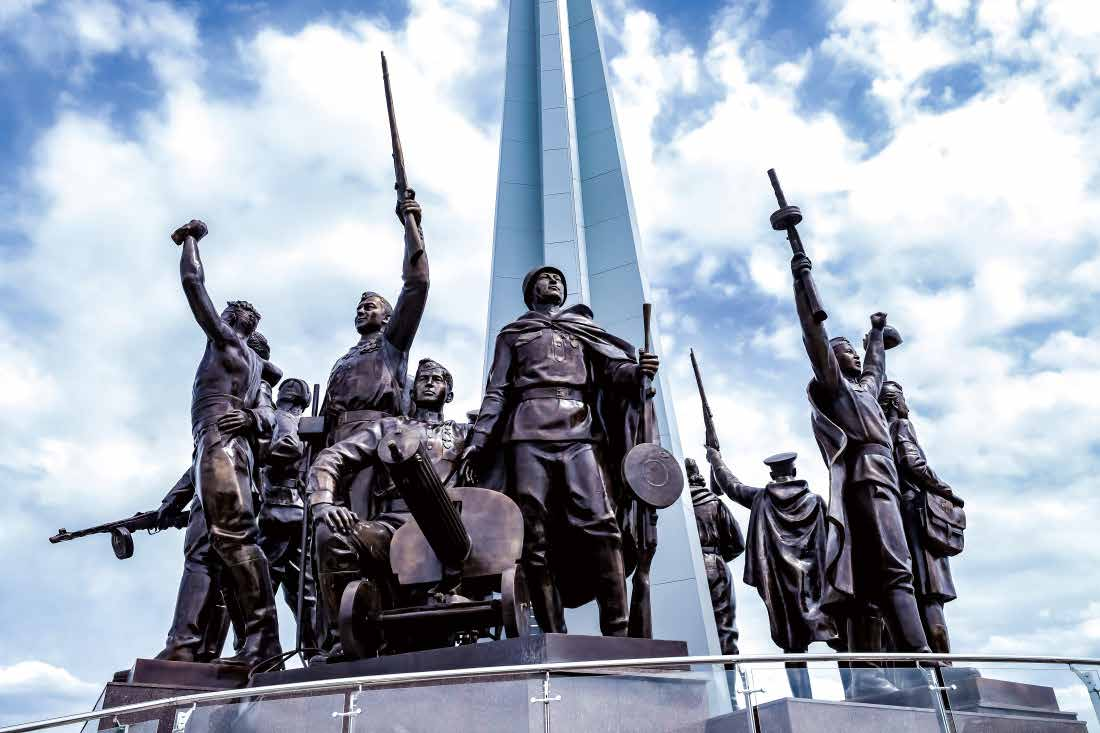
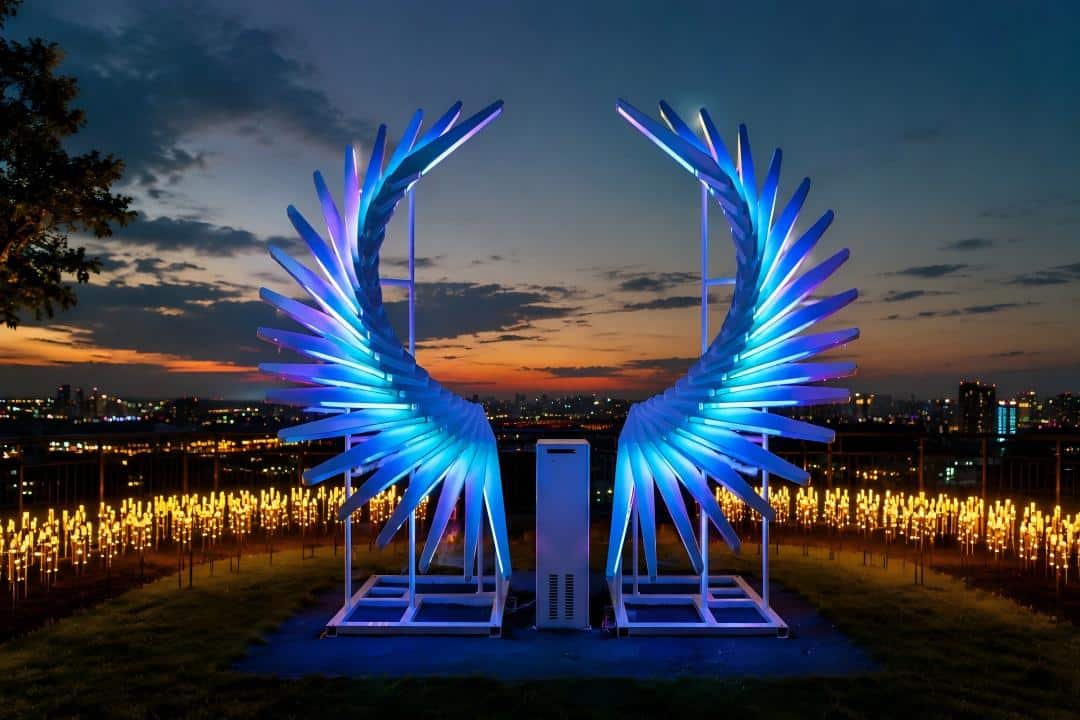
A roundabout sculpture is often expected to become a local landmark. It may mark a city entrance, represent local culture, or give an important road a stronger identity.
But a roundabout is different from a park or plaza. Most people see the sculpture from a moving vehicle, from several directions, and only for a short time. It must also work with roads, signs, lighting, planting, and daily traffic.
For this reason, a successful project should not begin with, “How can we make it bigger?” It should begin with, “How will this sculpture work in this location?”
1.Start with the Real Site
Before design begins, the team should understand the roundabout itself. This includes its size, the usable area in the center, the main approach roads, nearby buildings, existing trees, road signs, and the distance from which people will first see the sculpture.
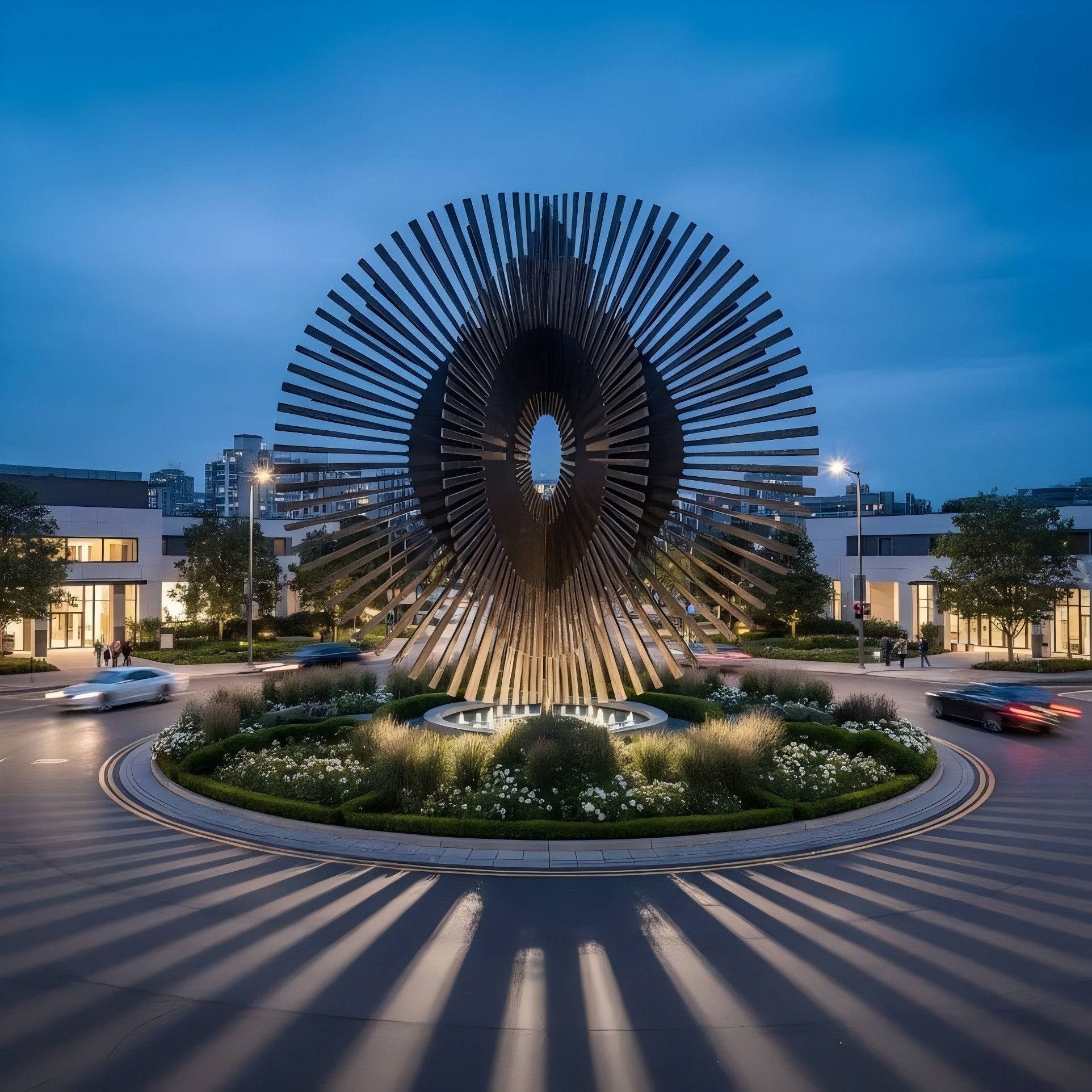
These details affect the sculpture’s height, width, direction, and overall form. They also affect transport, installation, and future maintenance.
A design may look impressive in one image but still feel too small, too large, or poorly positioned on the real site. Good design starts with accurate site information.
2.Design for People in Moving Vehicles
Drivers and passengers may have only a few seconds to see a roundabout sculpture. Small details that look attractive in a drawing can disappear completely on the road.
The main shape should therefore be clear from a distance. A strong outline and one clear visual idea are usually more effective than many decorative elements.
This does not mean the sculpture has to be simple. It means the design needs a clear order: people see the main form first, while smaller details add interest from closer positions.
3.Keep Important Views Open
A roundabout is first a traffic space. Drivers need to see other vehicles, road signs, pedestrians, and the entrances and exits around them.
The sculpture, its base, and the surrounding plants should be planned together so they do not block these views. Mirror surfaces, strong lights, and changing light effects should also be checked carefully because they may distract drivers.
The design should be reviewed from every main road before production begins. The project team should also confirm all local road and safety requirements.
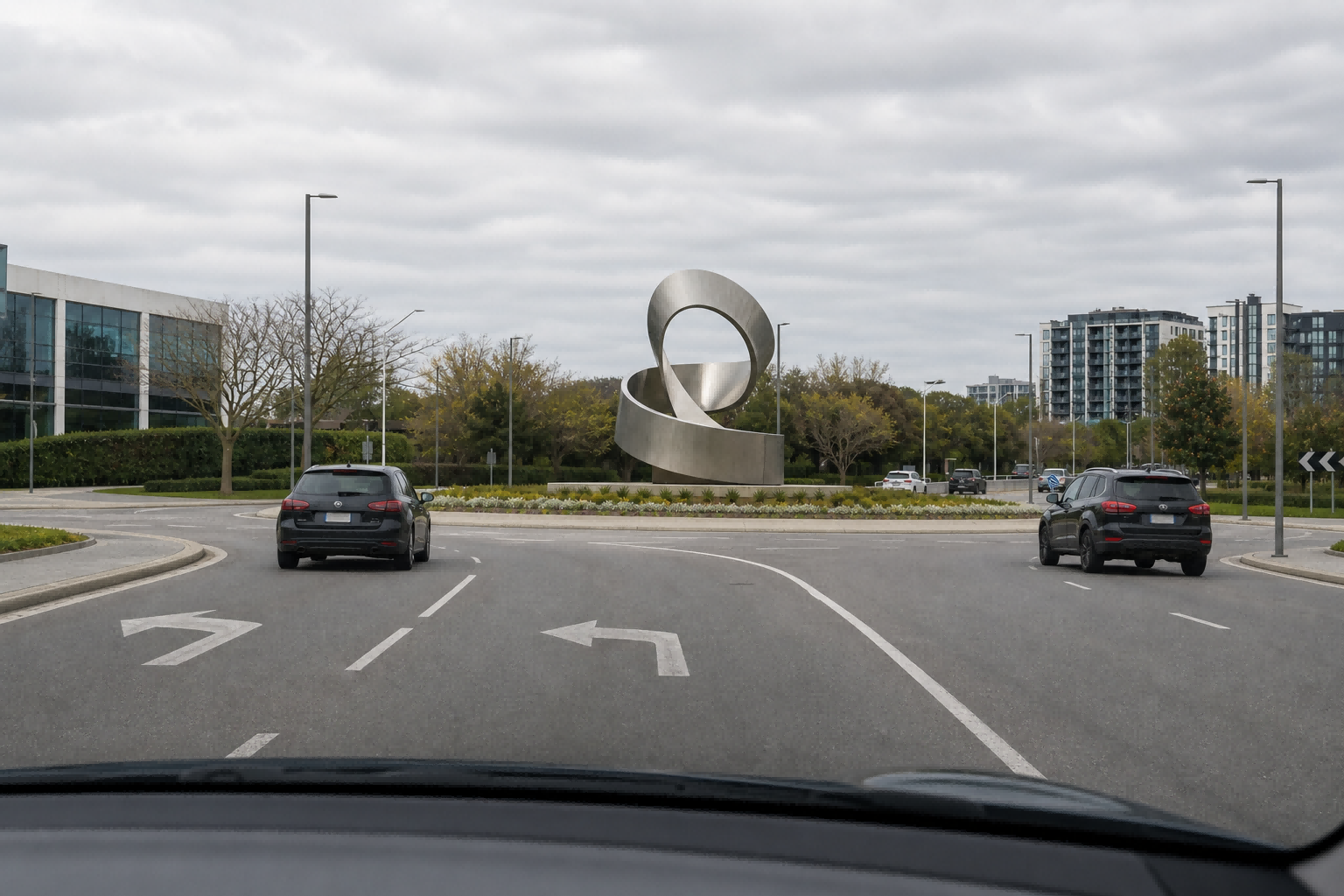
4.Make Every Side Work
A roundabout sculpture does not have only one front. People see it while approaching, moving around, and leaving the roundabout.
The front, sides, and back should therefore be developed as one complete form. The base, joints, support points, and access panels should not look like parts added after the design was finished.
The sculpture can offer a different view from each direction. This can make the experience more interesting, but every important angle should still look balanced and complete.
5.Connect Size, Structure, and Foundation
The right size depends on more than height. Road width, the size of the centerl island, nearby buildings, planting, and viewing distance all change how large a sculpture appears.
Once the size and form are approved, the sculpture must be developed into something that can be safely built. Its internal support depends on its height, weight, shape, and exposure to wind. The foundation and ground connection must work with this support.
Rainwater should not collect inside the sculpture or around its base. A qualified local engineer should confirm the foundation and final connection based on the ground conditions and local rules.
6.Plan Materials, Transport, and Installation Together
There is no single best material for every roundabout sculpture. The right choice depends on the local weather, design, finish, budget, and future maintenance.
Coastal areas need better protection from salt and moisture. Hot and sunny locations need finishes that can keep their color. Mirror surfaces require regular cleaning and should be checked for strong reflections.
Large sculptures may also need to be divided into sections for shipping. Before production starts, the team should confirm section sizes, joint positions, the transport route, crane space, lifting points, installation order, and access for future repairs.
Planning these details early helps protect the final appearance and prevents expensive changes on site.
What Should Be Confirmed Before Production?
Before manufacturing begins, the project team should be able to answer these questions:
- Is the size suitable for the actual site?
- Is the main form clear from every approach road?
- Does the design keep important traffic views open?
- Are the material and finish suitable for the local climate?
- Have the internal support, foundation, and ground connection been confirmed?
- Can the sculpture be transported, installed, inspected, and repaired safely?
If these questions are answered early, the project becomes easier to control in both the factory and the installation site.
A successful roundabout sculpture is not simply a large object placed in the center of a road. It is a complete project that connects art, location, safety, production, transport, installation, and long-term use.
As a professional sculpture manufacturer, Vincentaa supports clients from site review and design development to material selection, production, delivery, and installation. We help turn creative ideas into sculptures that are clear, buildable, durable, and right for their locations.